







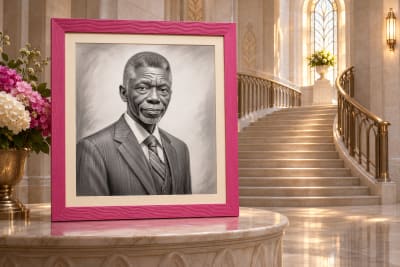
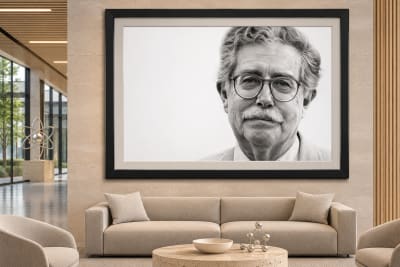




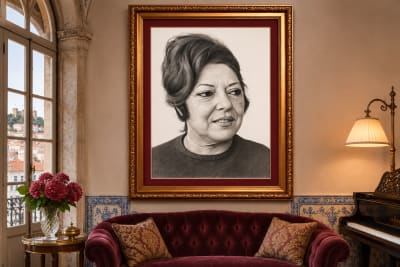



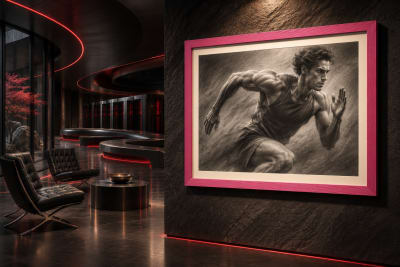



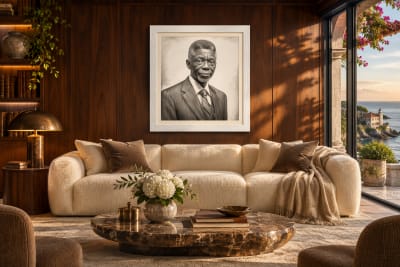

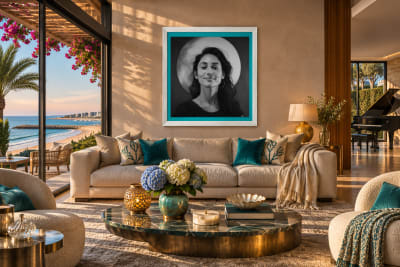


Charcoal is one of the oldest drawing materials there is. It is almost pure carbon, made from charred wood, which is why its blacks are so deep and matte.
Charcoal
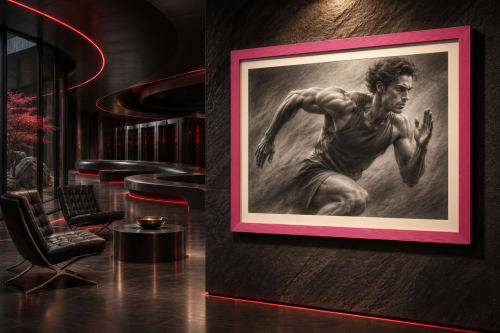
It allows intense blacks, very soft blending and a dramatic contrast of light and shadow. It is ideal for large portraits, where expression and volume matter more than colour. Once fixed and framed under glass it is stable: carbon pigment does not fade in light.

Graphite
A graphite pencil gives fine, precise lines, but its blacks are never as deep and carry a slight metallic sheen. It works well small; in large format it tends to look grey.
Oil
Oil painting brings colour and centuries of tradition, but needs far more time to paint and to dry, and the price follows. For the strength of a signature portrait in black and white, charcoal is the more expressive choice.

How to recognise a hand-drawn portrait
Up close, a hand-drawn portrait shows the direction of the strokes, overlapping layers and small variations of pressure. A print is perfectly uniform. All our portraits are drawn entirely by hand and signed by the artist.
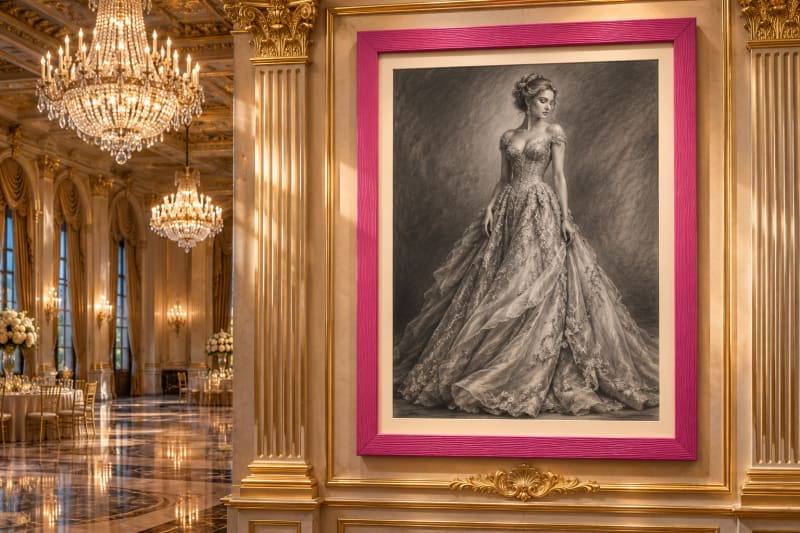
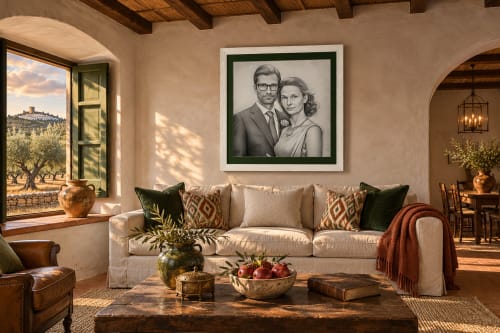
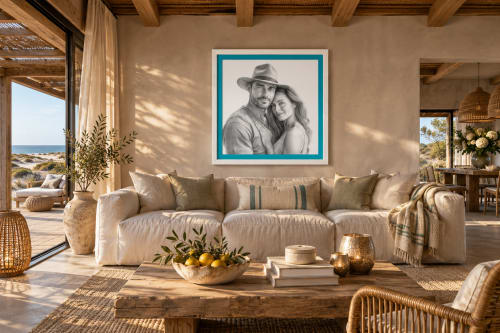
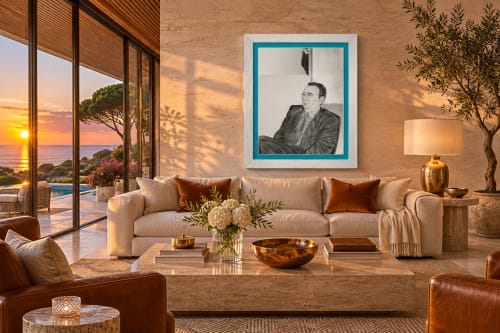
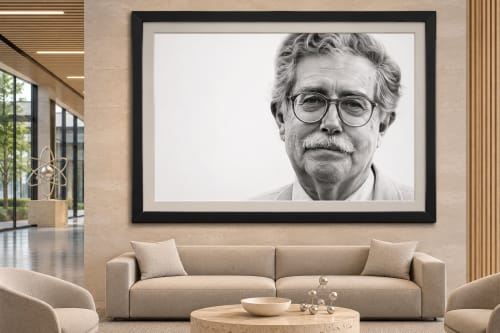
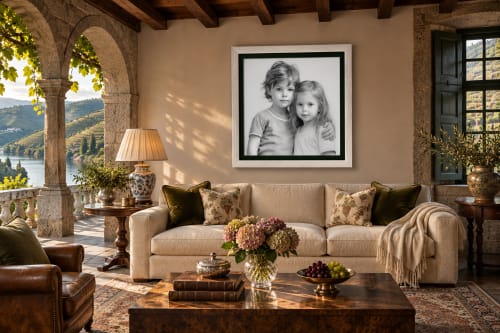
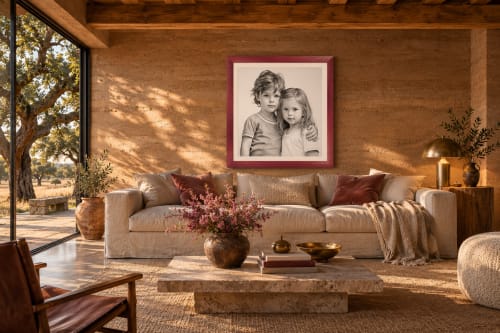
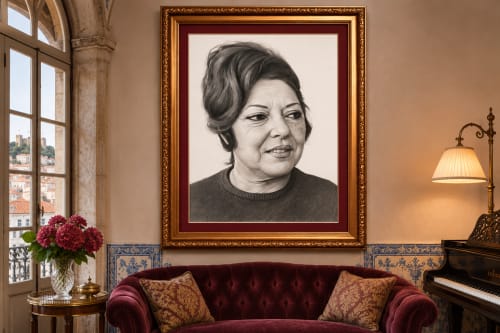
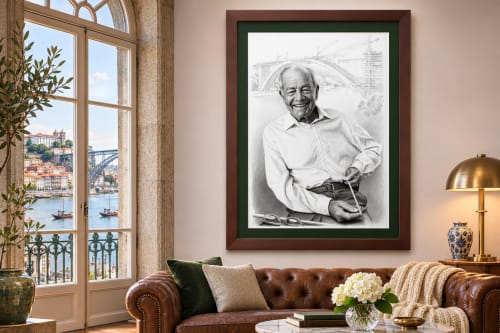
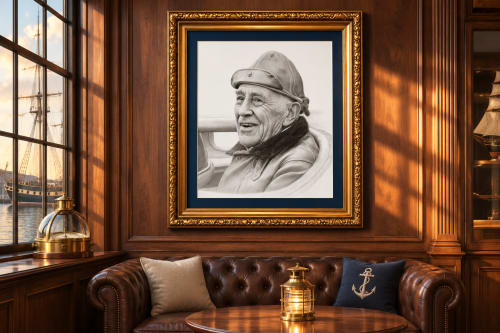
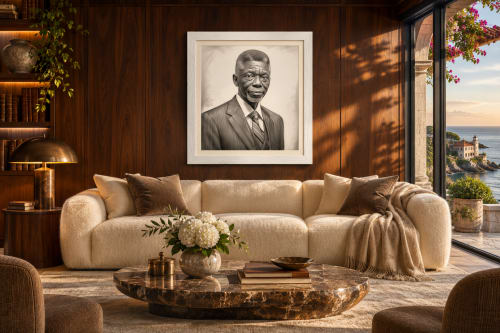
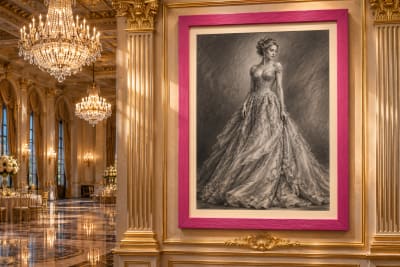
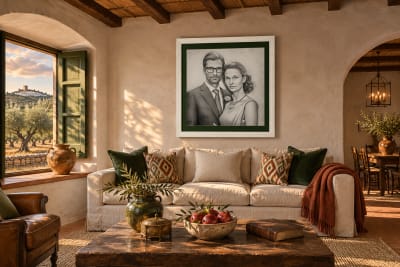
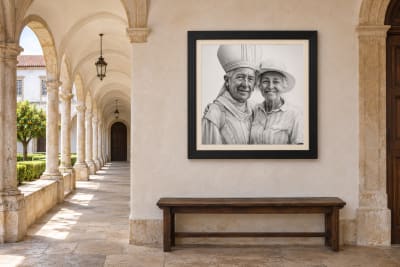
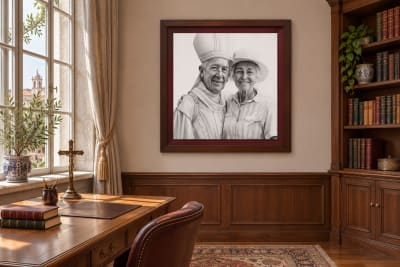
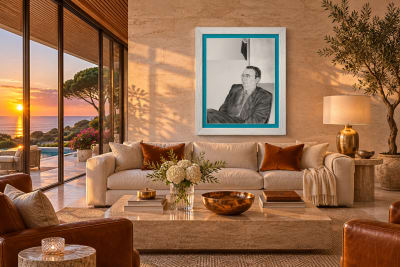
Illustrative images: the portraits are shown in simulated interiors to convey their scale and effect on the wall.